Your primary email address is the digital gateway to your entire life: work opportunities, financial alerts, family communications, medical records, and personal memories. Yet millions of people casually hand it out for every newsletter signup, free trial, forum registration, app download, or online contest. In 2026, with record-breaking data breaches, AI-enhanced phishing, and aggressive data profiling, this habit has become one of the most dangerous everyday behaviors online.
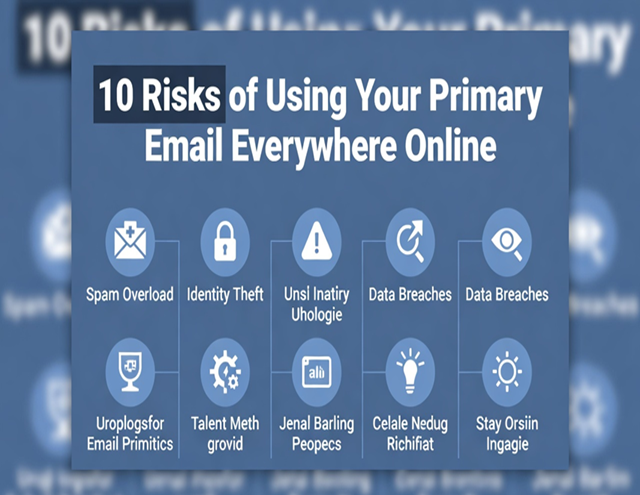
Reusing your main email creates a single, fragile point of failure. One careless signup can trigger cascading problems that affect your privacy, security, finances, and peace of mind for years. Below are the 10 most serious risks — backed by current trends and statistics — that make using your primary email everywhere a high-stakes mistake.
1. Uncontrollable Spam Overload and Inbox Chaos
The moment your email lands in a marketing database, it gets shared, sold, and resold endlessly. Legitimate signups turn into spam magnets as lists circulate among shady marketers.
- Daily global email volume exceeds hundreds of billions, with spam making up a massive portion.
- Users report inbox floods jumping from manageable to 50–100+ unwanted messages daily after casual signups.
- Important emails (job offers, bills, family messages) get buried, leading to missed deadlines, lapsed insurance, or overlooked opportunities.
Result: Your inbox becomes unusable, forcing constant cleanup instead of productive use.
2. Heightened Phishing and Spear-Phishing Attacks
Phishing remains the top attack vector in 2026, with billions of malicious emails sent daily. When attackers obtain your primary email (often from a breach), they craft highly targeted messages pretending to be from banks, employers, or services you actually use.
- Phishing causes average breach costs of around $4.88 million for organizations, but individuals face identity theft and financial loss.
- Reusing one email makes spear-phishing easier — attackers know it's your "real" address tied to sensitive accounts.
- Sophisticated campaigns use breached data to reference past signups, increasing click-through rates.
One convincing fake "account recovery" email can lead to full account takeover.
3. Massive Exposure from Data Breaches
Email addresses appear in the majority of breaches — often 53–61% of incidents expose emails directly.
- In 2025, the U.S. saw a record 3,332 data compromises affecting hundreds of millions.
- Early 2026 trends show continued escalation, with breaches exposing emails alongside names, passwords, and more.
- A single low-security site (forum, app, or newsletter provider) gets hacked → your primary email floods with credential-stuffing attempts across banking, social media, shopping, and work accounts.
Your email becomes a permanent credential in dark-web databases.
4. Permanent Digital Profiling and Tracking
Your email address acts as a unique identifier that data brokers and advertisers use to build detailed profiles.
- Every signup adds behavioral data: interests, location patterns, purchase history.
- Brokers aggregate and sell this info, fueling targeted ads, insurance rate hikes, job screening, and even political manipulation.
- Temporal metadata (when you open emails) reveals routines, sleep patterns, and vulnerabilities.
In 2026, AI accelerates profiling, turning your scattered signups into a comprehensive digital shadow.
5. Increased Risk of Identity Theft and Fraud
A leaked primary email is the starting point for comprehensive identity theft.
- Attackers combine it with public records, social media, and other breaches to impersonate you.
- Fake loan applications, tax fraud, or medical identity theft become easier when your "real" contact is confirmed.
- Business email compromise (BEC) tactics extend to individuals — scammers spoof urgent requests from "known" contacts.
Financial and reputational damage can last years.
6. Compromised Account Recovery and Chain Reactions
Most services use email as the primary password reset method.
- If attackers access your inbox (via phishing or breach), they reset passwords everywhere your primary email is linked.
- One weak link (a breached forum) cascades to Gmail → banking → crypto wallets → everything.
- Recovery becomes impossible if attackers change recovery details first.
Your primary email is literally the skeleton key to your digital kingdom.
7. Privacy Erosion and Unwanted Surveillance
Using one email everywhere lets companies (and governments) correlate your activities across platforms.
- Marketing firms track cross-site behavior tied to your email.
- Social media, shopping, and news sites build unified profiles for hyper-personalized (and invasive) targeting.
- In regulated environments, poor email hygiene risks compliance violations or unintended data exposure.
You lose control over who knows what about you.
8. Professional and Reputational Damage
Mixing random signups with your work email (or primary personal one used professionally) harms credibility.
- Recruiters see spam-filled inboxes or unprofessional associations.
- Clients notice delayed responses amid clutter.
- Breaches at sketchy sites can link your work identity to embarrassing or risky platforms.
Your professional image suffers long-term.
9. Legal and Compliance Risks (Especially for Professionals)
For freelancers, business owners, or regulated industries (healthcare, finance), using personal email for mixed purposes invites trouble.
- Sensitive data sent/received via unsecured personal accounts risks GDPR, HIPAA, or local privacy law violations.
- Fines, audits, or loss of professional licenses become real threats.
- Company policies often prohibit it — violations can lead to termination.
Casual use creates avoidable legal exposure.
10. Long-Term Mental and Emotional Toll
Constant spam, phishing fear, breach notifications, and recovery hassles create ongoing stress.
- Surveys show many breach victims experience anxiety, sleep issues, or distrust online.
- Time wasted managing chaos detracts from real life and work.
- The cumulative effect erodes digital confidence.
Peace of mind is priceless — yet easily sacrificed with one reused email.
The Simple Fix That Eliminates These Risks
Stop feeding your primary email to strangers. Switch to temporary/disposable emails for all non-essential signups. Services generate instant, self-destructing addresses that keep spam and threats isolated.
Top recommendation to start today:
- https://temp-email.me — Fast, reliable, no registration, multiple domains, perfect for quick verifications and privacy protection.
Other solid options: 10 Minute Mail, Guerrilla Mail, Temp Mail providers, YOPmail.
Take Action Now — Protect What Matters
In 2026, your primary email isn't just an address — it's your digital identity's core. Handing it out everywhere is like using the same key for your home, car, office, and safe deposit box. One loss compromises everything.
Make the switch: Open https://temp-email.me right now, grab a throwaway address, and use it for your next random signup. Watch your real inbox stay clean, focused, and secure.
Your future self — free from spam floods, phishing nightmares, and breach anxiety — will thank you.
Reclaim your inbox. Start protecting your primary email today.